

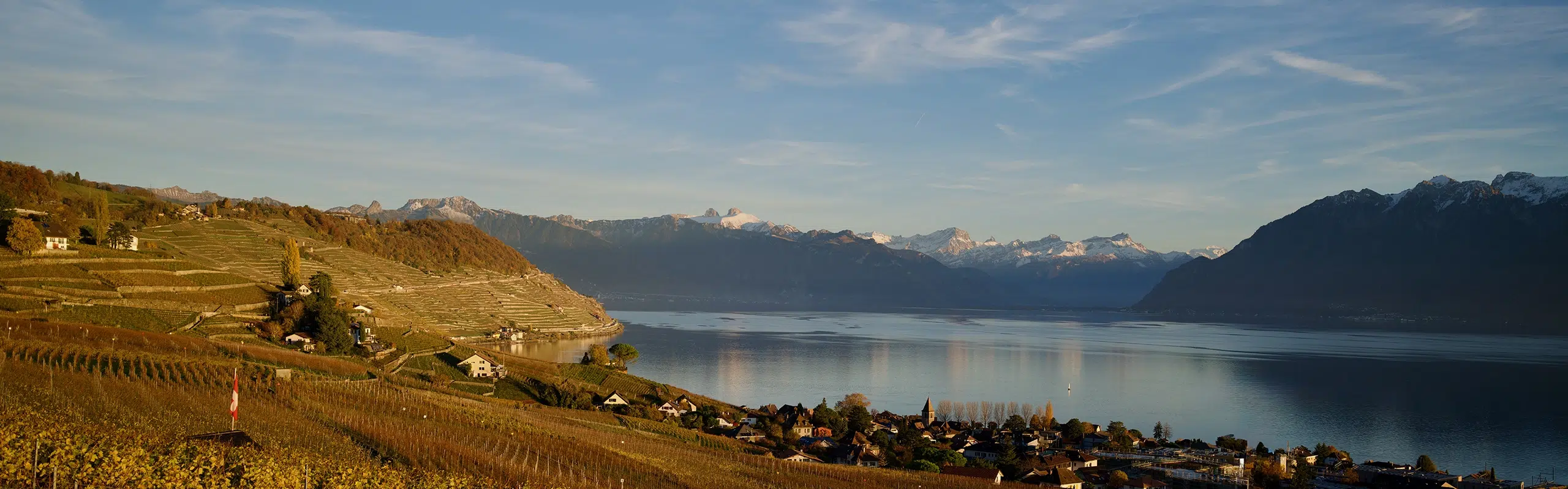
Historical research into viticulture in Lavaux
Commissioned by the Bovard Foundation, historian Guillaume Favrod has analysed the resources that could be useful for research into the history of viticulture throughout the canton of Vaud and in Lavaux in particular.
Such a historical overview is currently lacking in the Pays de Vaud and the wider region. Guillaume Favrod focused on the first stage of this documentary project: an inventory of archives, studies, popular works and private documents that will ultimately enable this historical study of Lavaux and the canton to be carried out. He submitted his findings to the Bovard Foundation in 2024.
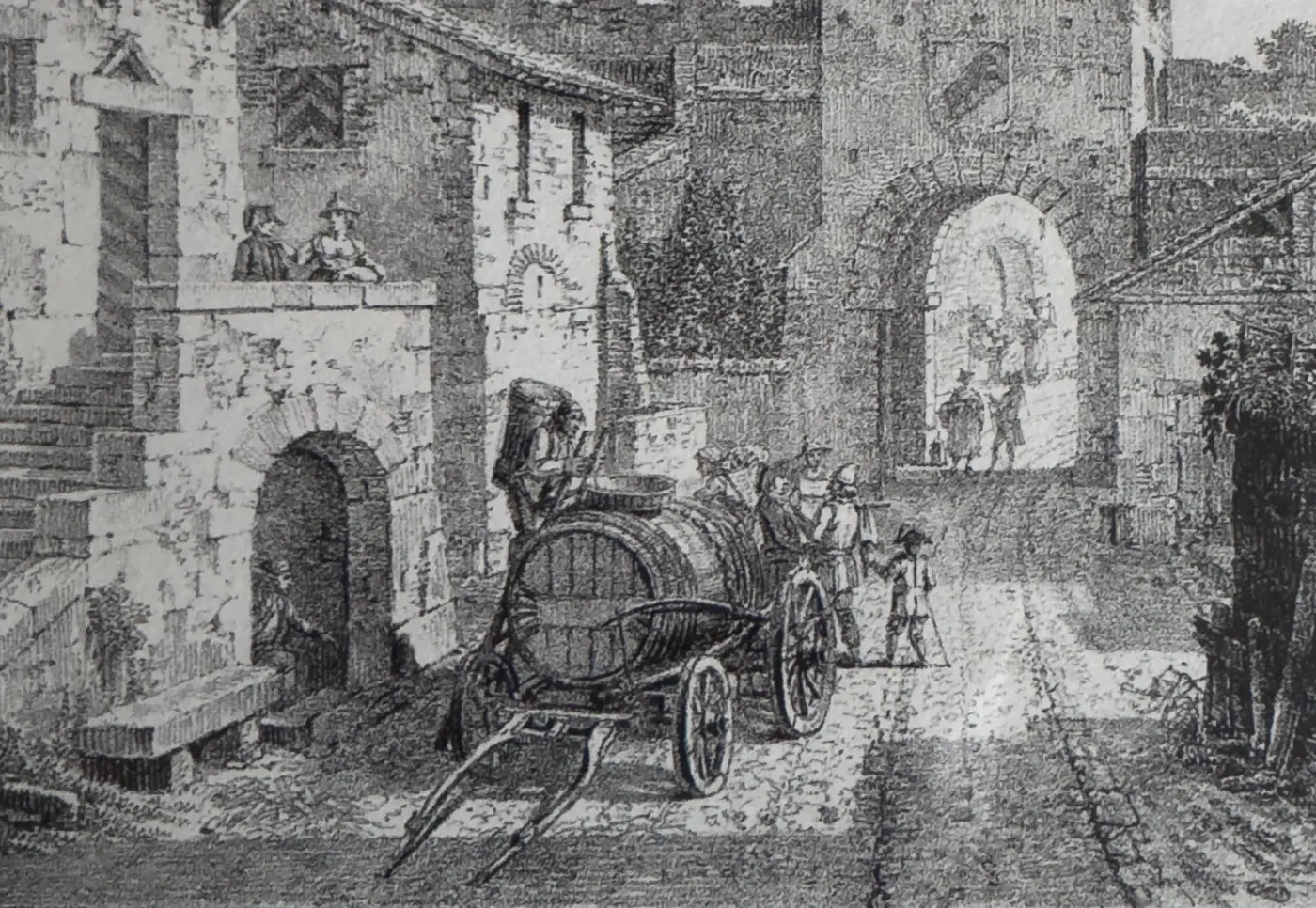
The resources required for a history of viticulture in Lavaux
Unlike regions such as Burgundy, Lavaux – and the canton of Vaud as a whole – lacks a comprehensive account of the development of its wine-growing industry. That is to say, there is no research that encompasses the many facets of a history spanning a thousand years: economic, demographic, territorial, social, cultural, technical or political. This gap is all the more glaring given that in Lavaux and the Pays de Vaud, viticulture has always been a sector of paramount importance. For centuries, the trade in wine has been one of the main sources of income for both public authorities and private individuals.
As a consequence of this importance, from the Middle Ages to the present day, documentary resources are abundant. They are held in public and private archives, in the communes of Lavaux, in Vevey, Lausanne, Bern and Paris. These include accounts, books, registers, regulations, contracts, deeds, correspondence, journals, memoirs, maps, studies and research – in short, a wide variety of sources. However, a synthesis of this body of over 5,000 documents is still lacking. Yet it is essential for understanding the socio-economic, demographic and cultural functioning of viticulture in Lavaux. In addition to these documents, there is a wealth of private archives that remain to be explored.
This is why the Bovard Foundation has entrusted the historian Guillaume Favrod – a PhD student in history at the University of Lausanne and a specialist in viticulture in the Vevey region – with the task of laying the foundation stone for this project. Specifically, to carry out a comprehensive inventory of the documents that will enable the history of wine-growing in Lavaux to be written in detail.
Without this preliminary study, it will not be possible to understand how the vineyard and its associated trades operate, have evolved, and the skills and traditions involved in the region. A historical study is also an excellent means of communication.
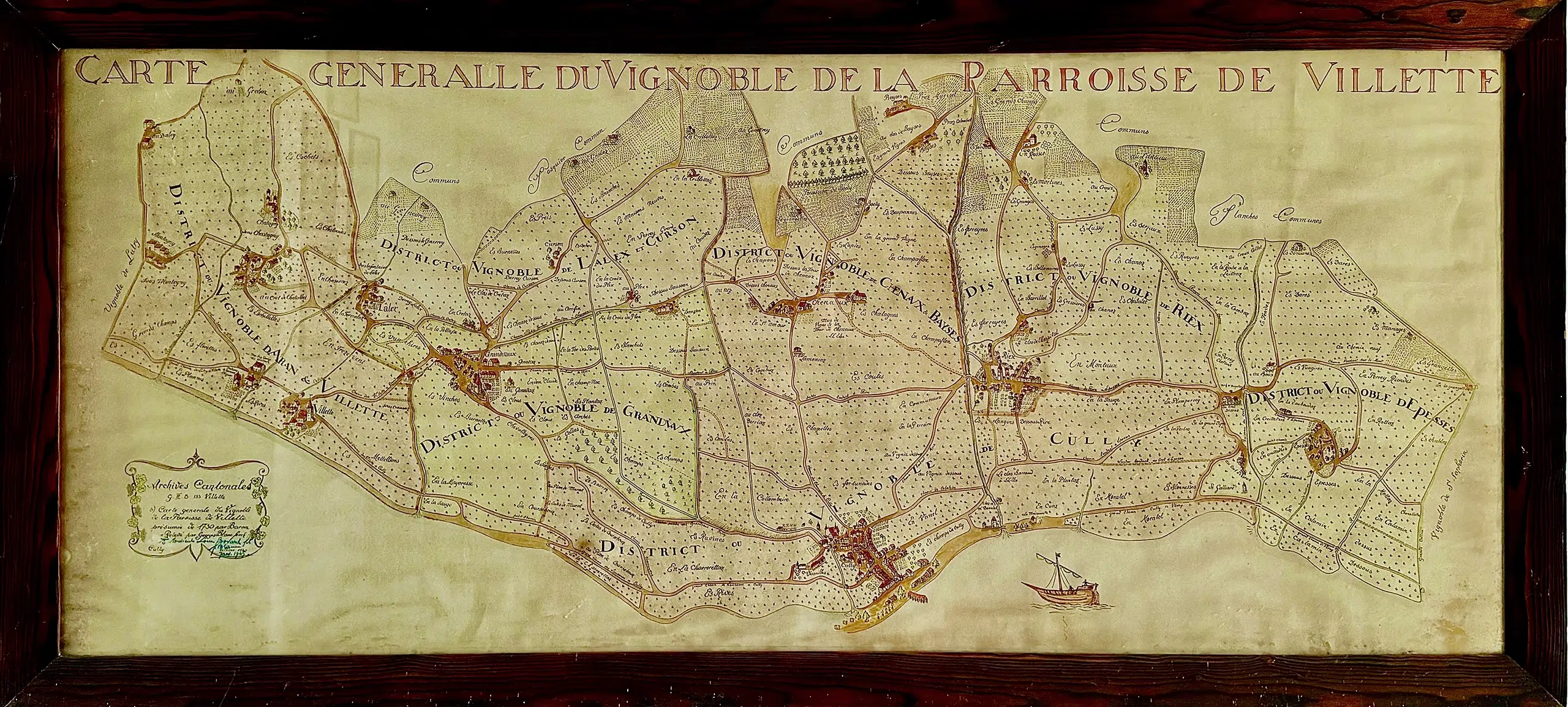
As his discipline has itself evolved, Guillaume Favrod proposes adopting new historiographical methods for future research, drawing on social history, network analysis, dynamic mapping and contributions from the general public (‘citizen science’ or participatory research). The aim here is to raise awareness of the history of Lavaux and to highlight the history of the wine estates and the winegrowers who have shaped this narrative, from the 11th to the 21st century
Guillaume Favrod notes in the conclusion to his report that “ At a time when viticulture faces numerous challenges and issues, it seems appropriate to recall that not so long ago the vineyards covered an area four times larger than today’s and that no fewer than 20,000 men, women and children combined – nearly a tenth of the population of Vaud – were active in viticulture”.
The Bovard Foundation’s remit was limited to this documentary review, which serves as a basis for more comprehensive research in the future.